
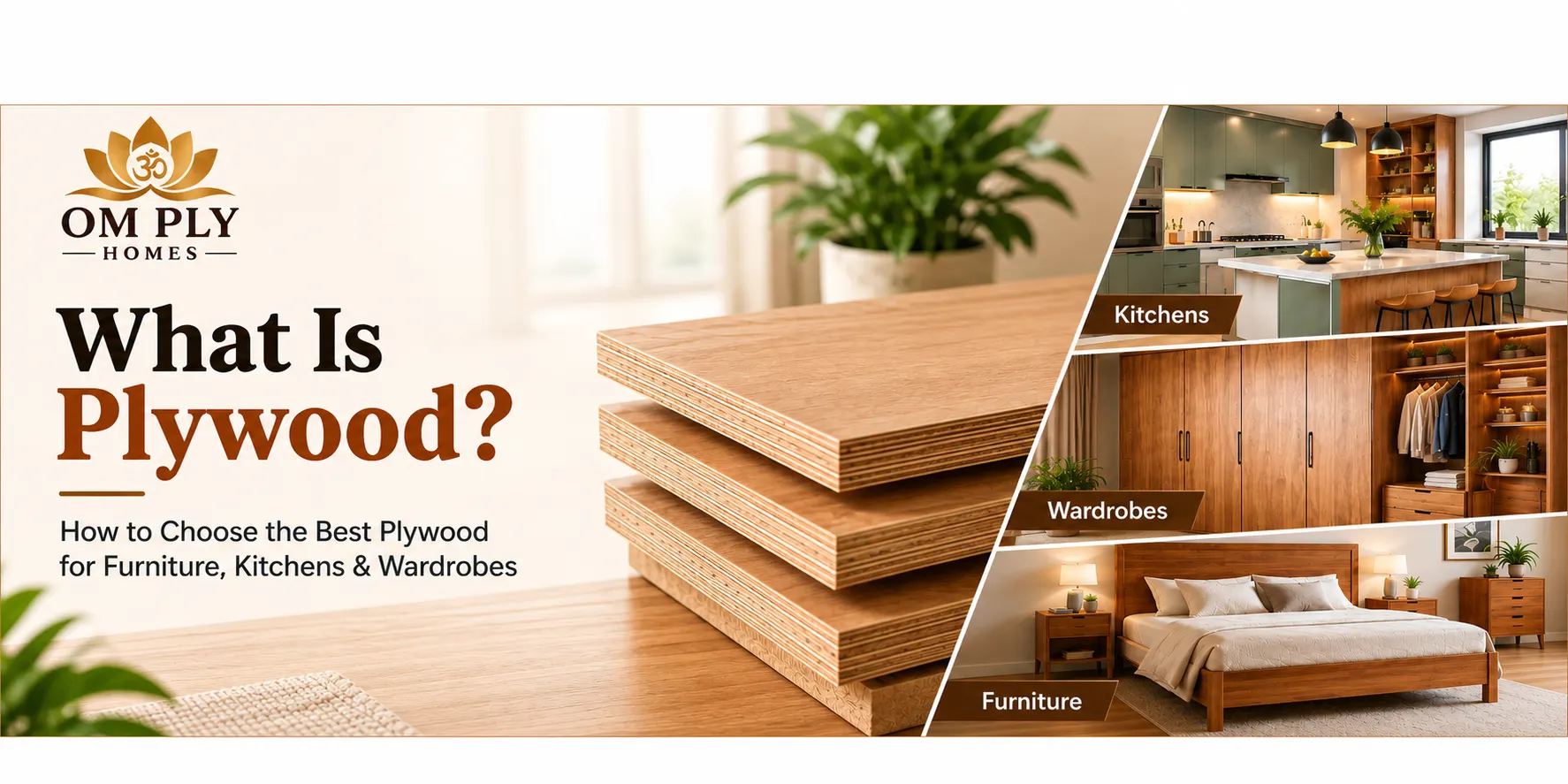
What Is Plywood? How to Choose the Best Plywood for Furniture, Kitchens & Wardrobes
Posted on October 28, 2026
Plywood has become a very popular material for modern interior design due to its durability, flexibility, and strength. Plywood is used for many applications within the home such as modular kitchen cabinets, bedroom wardrobes, beds, television units, and custom furniture; therefore, plywood contributes significantly to providing homeowners with functional and long lasting interior design solutions.
But it can be confusing to make the right choice while picking the right plywood for home interior design. There are many options available, including different types, grades, thickness, and prices. Choosing the wrong plywood for your project might cause it to swell, warp, and get damaged because of moisture.
So, what is plywood? Which are the top plywoods for making furniture? And how do you select the best plywood for kitchen cabinets and wardrobe doors? This article provides you with all the knowledge needed to make a well-informed choice.
What Is Plywood?
Plywood is an engineering-made product from wood. This is done through a process of joining several thin layers of wood veneer with adhesives while applying heat and pressure. Each layer of wood has its grain direction perpendicular to the layer next to it which helps increase the panel’s strength, stability, and resistance to split.
Plywood, unlike solid wood, is produced in various sheet sizes (thicknesses) and grade types. Because of this versatility, plywood can be used to produce many kinds of furniture and interior designs.
Plywood of high quality has many uses such as the creation of modular kitchens, wardrobes, beds, study desks, wall paneling, etc., since it provides a combination of strength, ease of use, and stability in terms of its size.
The properties of plywood are based upon multiple components. These components include the quality of wood used, the manner in which the veneers are constructed, the type of adhesive that binds the layers together, the method by which the product is produced, and any applicable product standard.
What Are the Different Types of Plywood?
Choosing from the many varieties of plywood allows you to make an informed decision when choosing the most suitable type of plywood for your interior design needs.
MR Grade Plywood
MR is an abbreviation for Moisture Resistant. It is a type of plywood that has been made to resist the effects of daily indoor humidity and some exposure to moisture; however, this type of plywood is not considered waterproof.
Best uses:
- Bedroom wardrobes in dry areas
- Study tables and bookshelves
- Indoor furniture
- Decorative cabinets away from water sources
MR plywood is a cost-effective alternative for budget-minded interior project designs that do not have frequent contact with water.
BWR Grade Plywood
BWR (Boiling Water Resistant) plywood has been designed with improved moisture resistance properties when compared to the typical MR plywood.
Best uses:
- Kitchen cabinets with appropriate protection
- Furniture in areas with moderate humidity
- Interior applications where occasional moisture exposure is possible
BWR plywood does not necessarily provide a waterproofing barrier for all types of applications. The suitability of BWR plywood as a waterproofing agent is determined by the plywood’s specification, how it was installed, what type of edge protection was applied, and how much moisture the plywood will be exposed to.
BWP or Marine-Grade Plywood
BWP is often used as short-hand for “boiling water proof” plywood, whereas marine-grade plywood has certain standards that it must meet to fall into that class. Therefore, it is important to remember that these two phrases cannot simply be assumed to mean the same thing unless the user first verifies what standards apply to each and whether or not the manufacturer states that both are manufactured according to those standards.
High-quality BWP or marine grade products that will withstand the high-moisture environments often found in kitchens, bathrooms, etc., are good options for use as cabinet doors, drawers, etc.
Best uses:
- Kitchen cabinets near sinks
- Furniture exposed to higher humidity
- Selected utility-area applications
- Interior projects requiring enhanced moisture resistance
Properly seal even moisture resistant plywood, use appropriate hardware, and prevent long term exposure to water.
Flexible Plywood
Flexible plywood has been manufactured to have greater flexibility than traditional plywood, allowing for use with design that includes curves and/or rounded shapes.
Best uses:
- Curved furniture
- Rounded wall panels
- Decorative columns
- Custom interior features
It is especially beneficial for designs that require curved surfaces instead of flat ones.
Decorative Plywood
Decorative plywood is employed in both furniture and interior design applications when the visual appeal of a space matters. Depending upon the particular type of decorative plywood used, the material can either incorporate a decorative wood veneer or provide the ability to apply an appropriate decorative finish.
Best uses:
- TV units
- Decorative wall panels
- Premium furniture
- Feature cabinets and display units
The last appearance will depend on the choice of either a veneer or a finish, and the correct preparation and installation of the product.
How to Choose the Best Plywood for Furniture?
Choosing the correct type of plywood for your furniture is based on more factors than just price. These include the intended application, anticipated weight capacity, moisture conditions, type of finishing you will use, and what is available in terms of cost.
1. Check the Plywood Grade
Along with hardwood floor substrates, MR (Moisture Resistant) Plywood may serve as good furniture material in the bedroom in a less humid atmosphere. On the other hand, when you are going to install kitchen cabinets and other furniture items which will be exposed to high humidity, it would be better to choose the furniture with the specified moisture resistant grade and corresponding documentation.
Always refer to the manufacturer’s information about the product rather than rely on the grade given on a sales estimate.
2. Select the Proper Plywood Thickness
The thickness of plywood is directly dependent on its strength, rigidity, weight, and cost. The proper thickness of plywood depends on a number of factors such as:
- Furniture design
- Un-supported span of the panel
- Loads that should be placed on the panel
- Panel structure
There are a lot of various types of plywood which differ in their thickness. The most popular plywood thicknesses include 6 mm, 9 mm, 12 mm, 16 mm and 18 mm. Still these thicknesses may be available from one manufacturer but unavailable from another one.
Typical applications include:
- 6 mm plywood: Certain back panels and light-duty applications.
- 9 mm plywood: Selected lightweight panels and cabinet components.
- 12 mm plywood: Some cabinet parts and medium-duty applications.
- 16 mm plywood: Selected furniture structures and cabinet components.
Plywood (18mm): This is typically used for the base structure of larger items of furniture and/or the main body of a wardrobe, depending on the specific design of the piece.
These are general examples, not specific rules. Follow both the furniture designer’s structural requirements and the manufacturer’s suggestions.
3. Inspect the Quality
Check the plywood for obvious flaws prior to buying it. Check for irregular surface texture, damage to edges, excessive voids in the wood, and signs of separation of layers (delamination).
Ask for the central building materials used in manufacturing, what kind of glue is employed, which product regulations apply to this product, and the terms of the warranty. If you are using this product for an important application, make sure to determine if there are test reports or certificates available for the product.
4. Take into Account the Finish
It is vital for you to choose the kind of plywood which would be compatible with the laminate, veneer, paint or any other kind of finishing material you want to use for the job.
Your final finish will depend largely on whether or not you use appropriate surface preparation, suitable adhesive for the material you want to apply and appropriate procedure during the installation.
Which Plywood Would Suit Modular Kitchens?
There are several needs of the kitchen for the homeowner in terms of the environment where the cabinets are located which may come into contact with moisture, liquids, steam and varying temperatures.
Due to these reasons, selecting the most appropriate plywood for modular kitchens needs special attention to the resistance to moisture and the quality of installation.
Recommended considerations for kitchen plywood
- Consider using an appropriate BWP (or marine) grade product with known specs, and protect the plumbing and seal around the sink.
- The selection of the grade of material used for overhead cabinets should be based on the amount of humidity present within the space where the cabinet will be installed, and the degree of potential exposure the cabinet may experience.
- For drawer interiors and interior components: Select materials that are appropriate for the amount of weight they will support, the type of construction, and the manufacturer’s suggested materials.
- For cabinet shutters: Think about how thick you want the plywood to be, if your hardware will fit with the shuters, what kind of finish you would like to apply to the wood, and if there are any weight considerations based on the design of the shuters.
- Moisture resistant plywood will not make up for leaks in piping, pooling water, or unsealed edges. To ensure the performance of moisture-resistant plywood over time, proper installation and adequate ventilation are required.
Compare the technical specs of the product, the warranty, and whether it would be appropriate for your kitchen prior to purchasing.
How to Choose the Best Plywood for Wardrobes
Your wardrobe requires a material that can bear the weight of clothing, shelves, drawers, and other hardware, and maintain its structure through time.
Your choice of plywood as the material for your wardrobe depends on various factors including moisture content in the room, size of the wardrobe, interior design of the wardrobe, and your budget.
Consider the following important factors
Strength and weight-bearing ability
Shelves that form part of your wardrobe should have the ability to bear the weight of your clothing and other materials, without excessive deformation under load. Select the right thickness of the material for shelves, depending on their span and weight that you intend to put on them.
Resistance to moisture
MR Plywood is an option for use in a dry bedroom environment. However, when selecting materials for use in a wardrobe located within a humid room, it may be better to select a material that offers greater resistance to moisture. Prior to installing MR Plywood, locate the cause of the moisture.
Hardware compatibility
The correct placement and installation of screws can enhance the performance of hinges, drawer channels, and other hardware. Hardware components must also match up well with both the panel thickness and construction.
Surface finish
Wardrobe finishes, such as laminate, veneer, etc., allow for a variety of designs to be created. You may choose a finish that will complement the existing design of your room, meet your maintenance needs, and fit within your financial constraints.
Long-term value
Select plywood not simply because it’s cheap, but also considering its quality, warranties offered with purchase, how much it will cost to install and how long you can expect it to last.
What Factors Affect Plywood Price?
The cost of plywood can change based upon many different variables, therefore, it is necessary to compare products with the same criteria.
Key factors include:
In general, products that are designed for use under more harsh environmental conditions (such as high-moisture or extreme temperatures) will be more expensive than those which can withstand less severe environments.
- Thickness: Thicker sheets generally use more material.
- Core and veneer quality: Quality of construction will affect the strength and consistency of the product.
- The manufacturer’s reputation, how well the item is tested, and what kind of warranty it has may influence its price.
- Sheet dimensions – When comparing quotes for the same size and thickness, compare the same dimensions and thicknesses.
- Furniture installation and finishing costs include materials such as laminate, veneer, edge bandings, hardware, and labor.
To get a true price, ask for a quote today from your supplier and verify that the items you want to buy meet all of your requirements. Just because it’s the least expensive option doesn’t mean it will be the most budget friendly in the long run.
Common Mistakes to Avoid When Buying Plywood
Avoid these common mistakes when selecting plywood for your home interiors:
- Selecting plywood solely on price is a mistake. You should evaluate how well the product will meet the application’s performance specifications, as well as the quality of the product.
- Assuming all plywood grades are water-resistant, check the manufacturer’s documented specifications.
- Under sized panels, as well as un-supported shelving of great length, may buckle when subjected to loading.
- Overlooked Edge Sealing: Exposed edges can permit moisture entry into the product based upon both product type and environmental conditions.
- Quality of installation is ignored: Even with high quality materials, poor work will affect the effectiveness of the material.
- Verify Product Information: Prior to buying, review the product label, grade, dimensions, applicable standards, and warranty.
By selecting a well-chosen material, you can decrease the amount of maintenance required for your furniture and increase its lifespan.
Conclusion
The type of plywood used in contemporary interior design for homes is dependent upon its application, location, and the intended use. When selecting a plywood product to create indoor furniture that will not come into contact with moisture, MR plywood would be the ideal choice. For those applications that involve some exposure to moisture, BWR or BWP plywood products are better suited. Additionally, flexible and decorative plywood options exist to provide flexibility in design and creativity in developing specialty furniture.
When selecting plywood for use in making furniture, kitchen cabinetry, and wardrobe systems, you should take into account the plywood’s grade, thickness, structural integrity, level of moisture protection, surface treatment, and overall project cost.
Working with a professional interior decorator can assist in choosing materials which will meet the demands of both durability and aesthetic value, while staying within your financial boundaries.
Frequently Asked Questions
What is plywood used for?
The many uses of plywood include, but are not limited to, using it in kitchen cabinetry, clothing storage (wardrobes), sleeping platforms (beds), dining/writing surfaces (tables), shelving systems (shelves), entertainment/display units (TV units), decorative/protective coverings for walls (wall panels), and as a base material for other types of furniture/interior design elements.
Which plywood is best for furniture?
To find out which ply is suitable for particular furniture, one must consider its location, the amount of weight it can hold, its exposure to moisture, and the amount of money one has at his or her disposal. It is possible to use MR plywood to manufacture dry indoor furniture, but some other type of plywood, which is even more resistant to moisture, should be used with plywood under harsh conditions.
Which plywood should be used in modular kitchens?
It is possible to use either BWP or marine-grade plywood, provided it satisfies all the requirements. Nonetheless, the correct installation and sealing of the plywood edges is still required.
Which plywood thickness is best for wardrobes?
The required thickness will depend upon several factors including the wardrobe’s design, the spacing of the shelves (shelf span), what types of loads you plan to place on it, and the method used to construct the unit. Thickness options like 16mm or 18mm are typical for many load bearing structural parts of the wardrobe, however, the ultimate choice of material thickness should meet all of your design requirements.
Is plywood better than MDF?
The selection of either plywood or MDF depends upon the intended use of the material and whether or not there will be exposure to moisture. While MDF board may be used when you want to achieve a smooth finish with paint, and/or add decorative elements to your project, plywood is usually the preferred option for some of the load-bearing aspects of furniture construction.
How do I inspect the quality of the plywood before purchasing it?
Check the plywood sheet for any signs of damage, ensure that the plywood sheet meets all necessary grading criteria, ensure the measurements are correct, consult the manufacturer’s specification and warranty details, and ask for any quality certification if required.
What is the difference between MR, BWR and BWP plywood?
MR plywood is used in regular indoor humidity conditions. BWR plywood offers improved resistance to moisture and BWP plywood is made for more difficult moisture conditions as defined in the respective product specifications. Always check the particular product specification prior to purchasing the product.
How much does the plywood cost?
The price of plywood depends on the quality (grade), the thickness (how thick), the brand, the dimensions of the panels and the location. You should always ask for an up-to-date price quotation and compare the products with comparable specifications.

Comments are currently closed.