
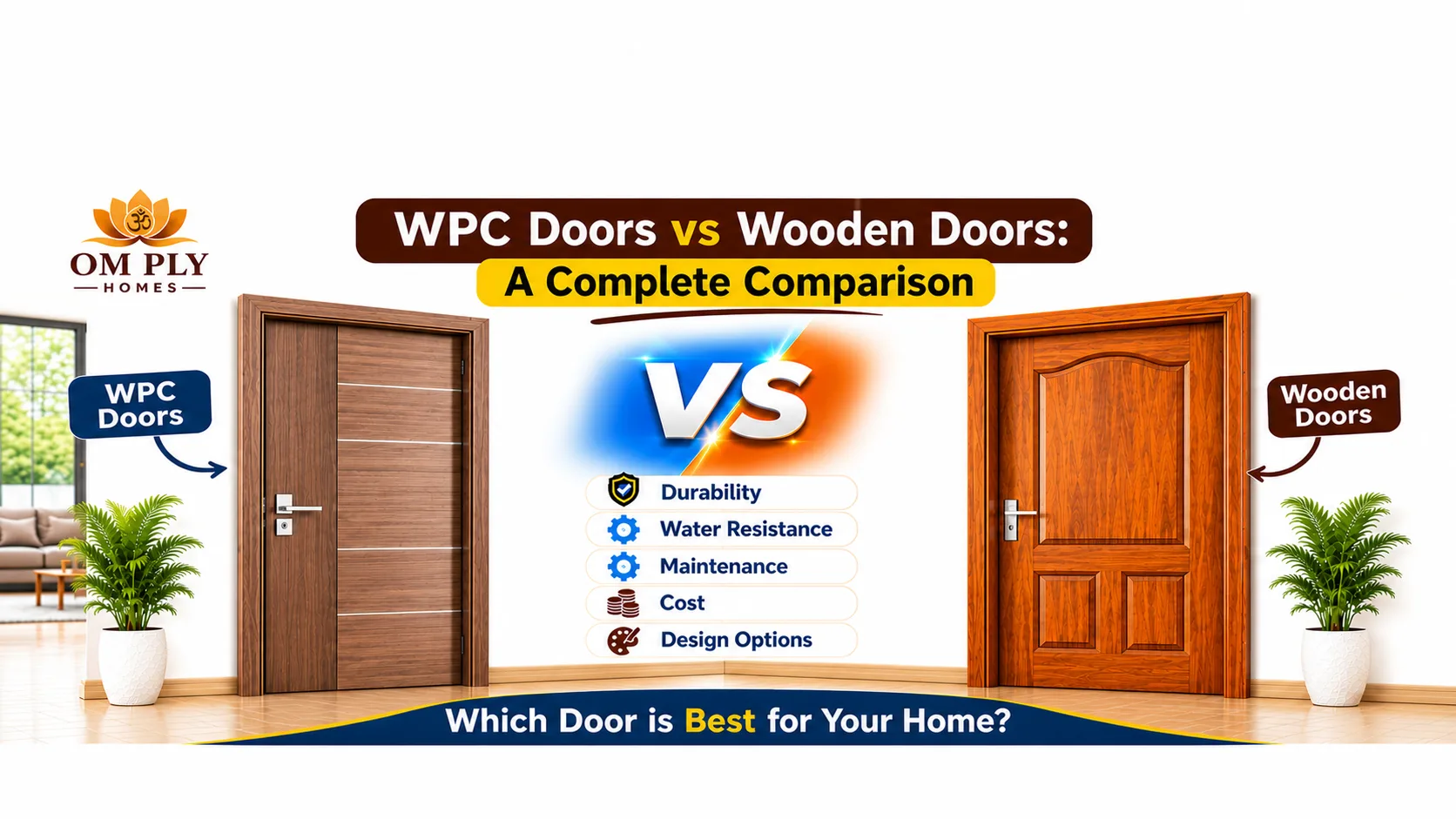
WPC Doors vs Wooden Doors: A Complete Comparison
Posted on November 2, 2026
Choosing the right door design, whether during planning or renovation, will have an immense effect on the aesthetics, function, and feel of the interior space of your house. Besides security and privacy, another important aspect of doors is their role in determining the interior style. Thanks to all the varieties available to us today, we can choose from many different kinds of doors for residential and commercial use. WPC and Traditional Wooden Doors are two such types.
In contrast, when reviewing WPC doors versus wood doors, many homeowners ask questions about how durable each type of door is, how much water it can handle, what type of maintenance is required for both kinds of doors, how expensive each kind of door will be to buy and install, and which of the two has more design possibilities. Traditional wood doors have long been recognized as having a classic look and feel that will always stay in style; however, WPC doors provide modern advantages such as being resistant to moisture, requiring very little upkeep and being able to withstand attacks by termites.
In this guide, we’ll explain how WPC doors differ from wooden doors so you can decide which door to install in your home.
What Are WPC Doors?
Wood Plastic Composite (WPC) is what the term WPC represents. The process of making WPC doors involves combining wood fibers/wood flour with thermoplastic resins/materials, as well as additive chemicals to enhance the performance and manufacturing properties of the resulting product.
The use of these door systems is growing rapidly in contemporary building projects due to their ability to resist moisture, their long-term durability and the ease with which they can be maintained.
Key features of WPC doors include:
- Resistance to moisture and water exposure.
- Resistance to termite and borer attacks.
- Low maintenance requirements.
- Availability in different designs and finishes.
- Suitable for use inside products (bathrooms, kitchens, etc.), according to product specifications.
What Are Wooden Doors?
The wooden door is a long-standing type of door that is created using a variety of types of natural wood including teak, sal, pine, oak, etc. The use of wooden doors in both residential and commercial buildings has been common practice for decades.
Wood doors have several attributes that make them appealing to consumers. Some of these include the inherent beauty of the wood’s natural grain pattern, its strength, its high-quality appearance, and how well it complements various architectural styles.
Key features of wooden doors include:
- Natural wood grain and texture.
- Classic and elegant appearance.
- Different wood species and finishes.
- Good strength when properly manufactured.
- Ability to be repaired, sanded and refinished.
WPC Doors vs Wooden Doors: Key Differences
Understanding the differences between these two door materials can help you make a better purchasing decision.
1. Water Resistance and Moisture Protection
Water resistant doors play a great role when choosing what type of door to install in your home especially in places such as bathrooms, kitchens, and other moist environments.
WPC doors: The WPC doors are normally very resistant to moisture because they are made of composite material that cannot absorb water as natural untreated wood would. This kind of door can be installed almost anywhere where there are moist conditions.
Wooden Doors: These doors can absorb water if they are not well treated, sealed and maintained. Moisture and humidity over time can cause swelling, warping, or deterioration.
Which one would you recommend? In general terms, WPC doors are usually recommended for moist indoor areas, depending on the manufacturer’s instructions.
2. Durability and Strength
When choosing doors for homes and businesses, there are many things that need to be considered. One such consideration is how long the door will last.
The dimensional stability of WPC doors and their ability to withstand common issues (such as termite infestation and water-related damage) make them high-quality products. The strength of WPC doors is determined by the density of the product, the materials used to create the product, and how well the product was manufactured.
Wooden Door: If a wooden door is constructed of high quality wood, and receives proper maintenance, it will provide you with a very strong and long lasting door. However, there are many factors which can affect how well your wooden door performs; these include the type of wood used, and the environment in which it resides.
Which of the two options would be the superior choice? Both have the potential for longevity. However, the determination of which option is most suitable will depend upon the caliber of the materials used in its production, the method of manufacture, and how it is intended to be applied.
3. Termite and Pest Resistance
Traditional wood door’s look, strength, and life span may be affected by termite damage.
WPC doors: WPC materials are often resistant to both termites and other wood-damaging insects due to their composite make-up. Therefore, WPC can be an ideal choice for households concerned about termite-related damage.
Wooden doors: Depending upon the type of wood used, treatment of the door, and environment in which it will be placed, wooden doors can be subject to damage caused by termites and borers. Protective measures may need to be taken.
WPC Doors Are Better When It Comes To Termite Resistance.
4. Maintenance and Cleaning
The maintenance of the door is an essential aspect of maintaining the aesthetic and functional value of your home interiors.
WPC doors: The WPC doors are easy to maintain and only need to be cleaned at regular intervals using a wet rag and the correct cleaning product. This is because unlike wooden doors, WPC doors don’t usually require polishing at regular intervals.
Wooden Doors: Wooden doors can require polishing, painting, sealing, or refinishing in order to keep them looking nice and protect them from moisture damage.
Which one is better? Wooden doors are bound to need more maintenance than WPC doors.
5. Design and Appearance
The appearance of the door will influence the entire look of the interior of your house.
There are a lot of variations in color and design when it comes to modern WPC doors. Wood grain finishes, plain designs, and modern designs give you the chance to choose a door that matches the interior of your house.
The beauty of the grain of wooden doors is just one of the most appealing features of the wooden door. This is the reason why many people decide to have wooden doors installed in their houses. The other reason why many wooden doors are chosen by people is because of the traditional look of the doors.
Better? Wooden doors provide the opportunity for those who want to use authentic, natural wood patterns; whereas WPC (Wood Plastic Composite) doors provide aesthetically pleasing contemporary designs and design freedom.
6. Cost and Affordability
The price of a door is determined by the quality of the materials used in its construction, the size of the door, how thick it is, the style of the door, the type of finish applied to it, and what will be needed to install it.
The cost of WPC Doors varies depending on the door’s density, quality, and how it was produced. Due to the reduced need for upkeep, these doors will most likely be cost-effective over time.
Wooden Doors: Wooden door costs differ greatly based upon which type of wood is being used. Higher-end hardwood doors are typically more expensive, especially if the door features any hand-carved details or specialized finishing.
Which is more appropriate? WPC Doors may offer an economical solution for a number of interior projects; however, it is important to consider both the total purchase price and the installation costs when comparing the options rather than just considering the first cost.
7. Environmental Considerations
In today’s world of building and improving homes, environmental impact is a growing consideration.
The environmental effects of WPC doors will vary based on how they are produced (i.e. if there is use of recycled plastic or wood) as well as the materials used, the time it takes to produce the door, the life expectancy of the door and whether it can be recycled.
Wooden doors: Wooden doors may provide an environmentally friendly alternative using renewable resources if the wood used to produce these doors is sourced from responsibly-managed forests. Additionally, the environmental impact of wooden doors is determined by how the wood is harvested, processed, and transported.
What are the pros and cons of each? Each material offers some environmental benefit as well as disadvantages. Choose products made of responsibly sourced wood or WPC that provide clear information about their materials and sustainability.
8. Installation and Workability
Proper installation is essential for the performance and lifespan of any door.
The installation method of WPC doors will vary depending upon the door’s construction and compatibility with the existing frame. Installation can be done through the use of appropriate hardware and recommended fixing methods.
Wooden Doors: Carpenters are used to working with wooden doors. Wooden doors can be made into many shapes, sizes and can be installed as needed. It is also important that the door is properly sealed and fits well.
Which is more effective? If properly installed using appropriate equipment, tools and procedures, both materials will be installed well.
WPC Doors vs Wooden Doors: Which Is Better for Different Areas?
The right choice also depends on where you plan to install the door.
| Area | Recommended option | Reason |
| Bathroom | WPC door | Good moisture resistance |
| Kitchen | WPC door | Practical for humid conditions |
| Bedroom | Both | Depends on design and budget |
| Living room | Both | Depends on interior style |
| Main entrance | Quality wooden or engineered door | Consider security and structural strength |
| Commercial interiors | Both | Depends on application and maintenance requirements |
Advantages of Choosing WPC Doors
Because of their many practical benefits, WPC doors are becoming more and more common in today’s homes.
Some important advantages include:
- Moisture resistance: Suitable for many indoor areas exposed to humidity.
- Termite resistance: Generally resistant to termite and borer attacks.
- Low Maintenance – Requires much less regular maintenance than most traditional wood doors.
- Modern designs: Available in different colours, textures and finishes.
- Dimensional stability: Quality products are resistant to moisture-induced dimensional changes.
- Flexible uses: Can be used in many different types of interior space such as; bathroom, bedroom, kitchen etc., based on requirements.
Advantages of Choosing Wooden Doors
Despite the popularity of WPC doors, many people still choose to use wooden doors.
Their major advantages include:
- Natural appearance: Genuine wood provides unique grain patterns and textures.
- Premium finish: Wooden doors create a classic and elegant appearance.
- Customisation: Can be carved, shaped, polished and refinished.
- Strength: High quality, solid wood doors have a strong ability to withstand physical forces.
- Classic Appeal – Fits with classic, traditional, and luxury home design.
Conclusion
The choice of whether to select a WPC door or a traditional wood door will depend on what is most important to you in terms of budget, desired style, installation location, etc.
With its ability to withstand moisture and termites, along with low-maintenance requirements, WPC doors may provide an effective solution for numerous types of interior door installations. On the contrary, if you want to use the look of real wood, craftsmanship of old-world quality and high-end finishes for your door then you should probably choose a wooden door. Compare the product specifications, quality of materials used, warranty, finishes available and what is required to install prior to making a purchase.
Select a door that has the proper mix of durability, appearance, function, and cost effectiveness for your home.
Frequently Asked Questions (FAQs)
Are WPC doors better than wooden doors?
WPC doors will last longer in moist environments than wood doors and will need less upkeep. Wood doors have a more authentic look and feel, which is why many homeowners prefer them. Ultimately, what is the best choice depends on what you want.
Are WPC doors waterproof?
WPC doors have an overall high level of water and moisture resistance. The performance of WPC doors will vary based on several factors, including the type of material used to create the door, how the door was constructed, and what the manufacturer specifies for its use.
Can WPC doors be used for bathrooms?
Yes, WPC doors are generally preferred for use in bathrooms due to their ability to withstand moisture and their ease of maintenance. When choosing a product, make sure that it is manufactured with materials designed to be used in bathroom environments.
Do WPC doors attract termites?
WPC Doors are typically resistant to termites and other wood-boring insects. They are a good replacement for untreated wood doors.
Are wooden doors more expensive than WPC doors?
No, not always. The price of a door depends on a variety of things including the type of wood used, the quality of the WPC (wood-plastic composite), the size of the door, the design of the door, and the finish. There are some premium solid wood doors which may be more expensive than most standard WPC doors.
Which door requires less maintenance?
WPC doors typically require less maintenance than other types of doors made from natural wood, since they don’t have to be polished or sealed regularly.
Can WPC doors look like wooden doors?
Yes. A wide variety of WPC door types can be found in different styles of wood grain texture and finish that make the WPC door look like real wood.

Comments are currently closed.